 Ultimate guide
What Does a Home Inspection Cover? A Buyer's Guide
Last Updated: November 15, 2026
Quick Summary
A home inspection covers the roof, exterior, foundation, interior rooms, heating and cooling, plumbing, and electrical systems, provided those components are visible and accessible. Inspectors evaluate condition and identify defects, but they do not dismantle walls or predict remaining lifespan. A standard home inspection is a visual, non-invasive evaluation of readily accessible systems.
- A bank appraisal protects the lender, while an inspection protects you.
- A typical home inspection takes several hours, depending on the home's size, age, and condition.
- Radon, mold, asbestos, termites, septic systems, wells, pools, and docks are not part of a standard inspection.
- Findings sort into three tiers: safety hazards, major defects, and maintenance items.
- Focus repair requests on safety hazards and major defects, and let the maintenance list go.
Table of Contents
- What a Home Inspection Is and Why It Matters
- The Home Inspection Checklist: What Inspectors Examine
- How Long Does a Home Inspection Take?
- What's Not Included in a Home Inspection
- Things That Fail a Home Inspection
- North Florida Climate and Property Features That Affect the Inspection
- What Happens After the Inspection Report Arrives
- Schedule Your Keystone Heights Home Inspection
- Frequently Asked Questions
What a Home Inspection Is and Why It Matters
A home inspection is an objective, visual evaluation of a property's major systems and components at the time of the inspection. It is not a warranty, and it is not an appraisal. This distinction changes how you read the report.
A bank appraisal protects the lender. An inspection protects you. The appraiser confirms the house is worth the loan amount; the inspector tells you whether the roof has three years left, whether the electrical panel is a known hazard, and whether that stain in the hallway is old paint or active moisture.
That difference matters most in older North Central Florida homes, where deferred maintenance hides behind fresh coats of paint. Below, we break down exactly what does a home inspection cover, what falls outside the scope, and what to do when the report lands.
Maryland Homeownership guide on inspections describes an inspection as information about a home's condition at a single point in time, not a guarantee of future performance. Our inspection process follows that same standard: visible, accessible, documented.
The Home Inspection Checklist: What Inspectors Examine
A standard home inspection covers the roof, exterior, foundation, interior rooms, heating and cooling, plumbing, and electrical systems, provided those components are visible and accessible. For a closer look at why to get a home inspection before buying, including what fails and what inspectors miss in Keystone Heights, see our dedicated guide. Inspectors evaluate condition and identify defects; they do not dismantle walls or predict remaining lifespan.
A typical home inspection checklist covers the following areas:
- Roof - covering, flashing, drainage, and visible penetrations
- Exterior - siding, trim, grading, driveways, and walkways
- Foundation and structure - visible footings, framing, and signs of movement
- Attic and insulation - ventilation, moisture staining, and insulation levels
- Interior - walls, ceilings, floors, doors, and windows
- HVAC - heating system, central air conditioning, and distribution
- Plumbing - water supply, drainage, water heater, and fixtures
- Electrical - service panel, wiring, outlets, and safety hazards
Roof, Exterior, and Structural Components
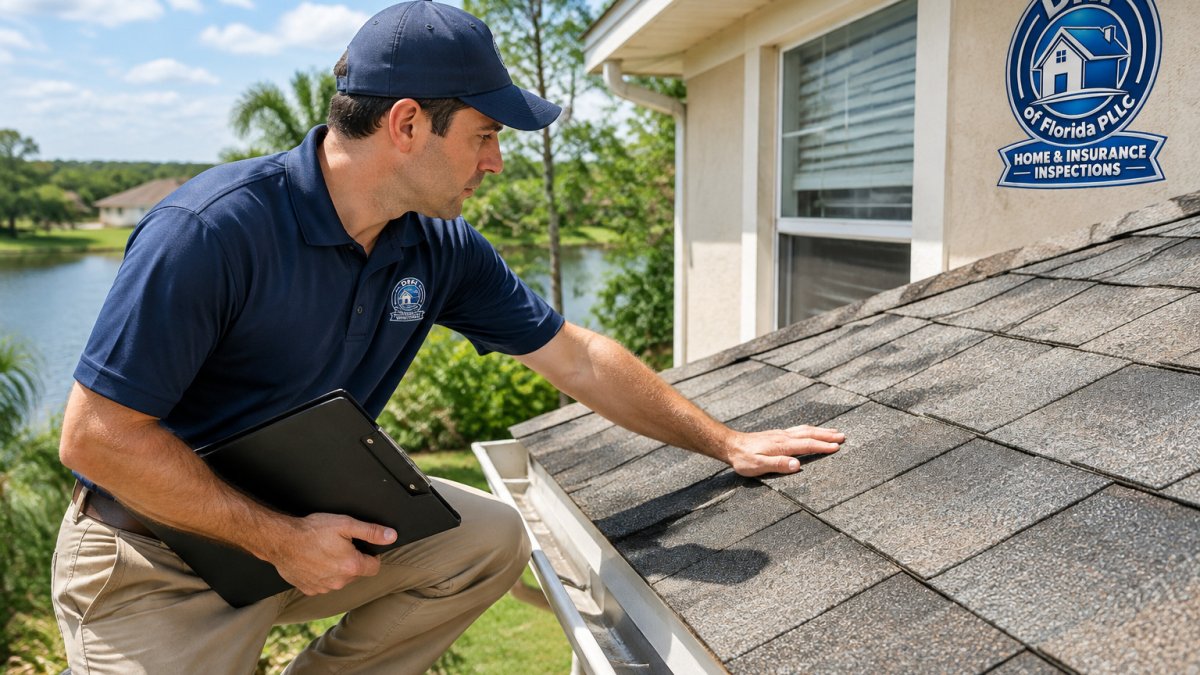
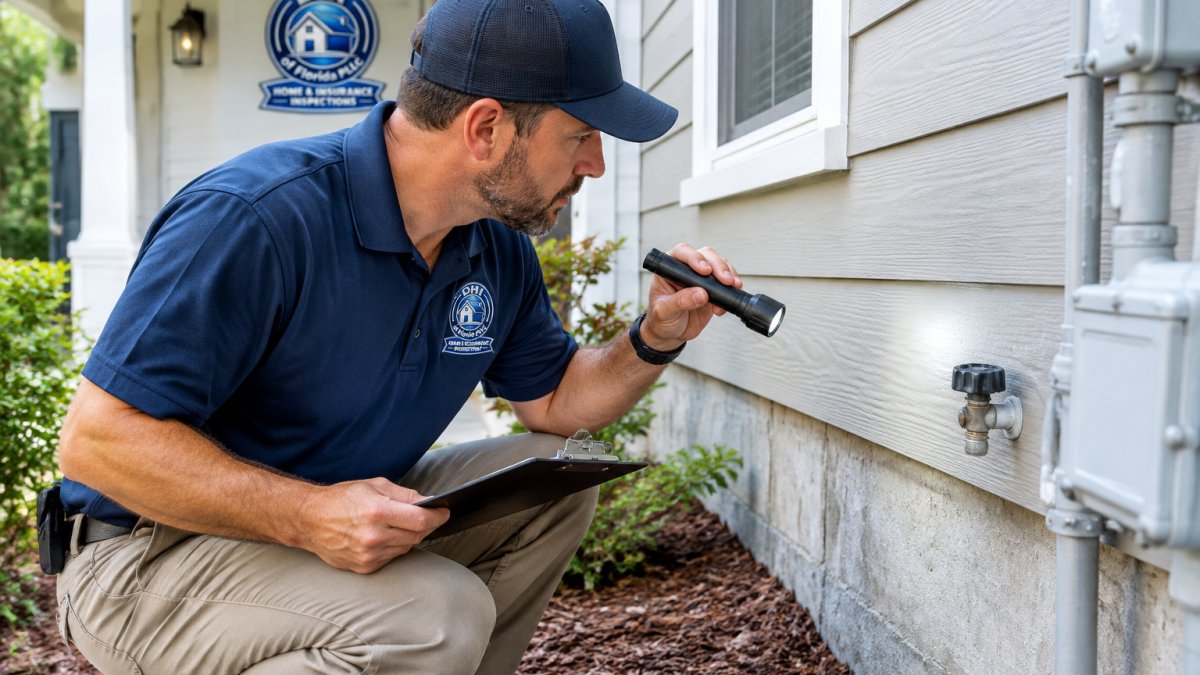
The roof covering, flashing, and drainage get close attention because they are the most expensive single repair on most homes. Inspectors look for lifted shingles, granule loss, patched areas, and signs of active leaks in the attic below. Exterior grading matters too: soil that slopes toward the foundation invites water intrusion.
Structural components include the visible foundation, floor framing, and load-bearing walls. Hairline cracks in a block foundation are common and often cosmetic. Diagonal cracks at window corners, or doors that no longer latch, tell a different story.
Interior Rooms, Walls, Ceilings, Floors, Doors, and Windows
Inside the house, inspectors evaluate walls, ceilings, and floors for moisture staining, settlement cracks, and evidence of past repairs. Doors and windows are operated to confirm they open, close, and latch. Fogged double-pane glass signals a failed seal.
Watch out: a freshly painted ceiling patch in a bathroom or closet often covers a past leak. Ask the seller for disclosure, and note the area so you can monitor it after closing.
Heating, Cooling, Plumbing, and Electrical Systems
The HVAC system is evaluated for function and condition, with the caveat that testing depends on normal operating conditions and temperature. The plumbing system is checked for water supply, drainage, and visible leaks at fixtures and the water heater.
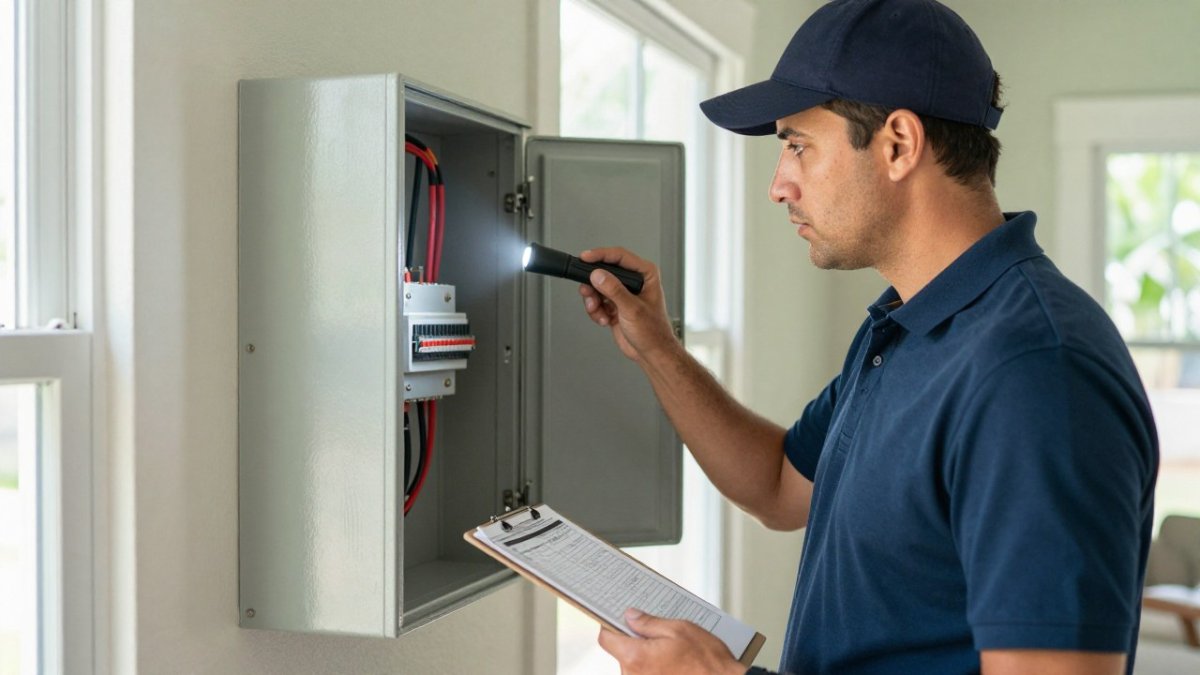
Electrical evaluation covers the service panel, visible wiring, outlets, and safety hazards like double-tapped breakers or missing cover plates. According to State Farm's guide to what a home inspection covers, standard inspections review these components when visible and accessible, which is exactly why the report language matters.
A standard inspection covers these areas when they are visible and accessible.
| Area | What inspectors check |
|---|---|
| Roof | Covering, flashing, drainage, visible penetrations |
| Exterior | Siding, trim, grading, driveways, walkways |
| Foundation and structure | Visible footings, framing, signs of movement |
| Attic and insulation | Ventilation, moisture staining, insulation levels |
| Interior | Walls, ceilings, floors, doors, windows |
| HVAC | Heating system, central air conditioning, distribution |
| Plumbing | Water supply, drainage, water heater, fixtures |
| Electrical | Service panel, wiring, outlets, safety hazards |
How Long Does a Home Inspection Take?
A typical home inspection takes several hours, depending on the home's size, age, and condition. Larger homes, crawl spaces, and older properties with additions generally take longer. You should attend if you can.
Bring questions. A good inspector will walk you through the findings in plain language before leaving, and that conversation is often more useful than the report itself.
What's Not Included in a Home Inspection
A standard home inspection is a visual, non-invasive evaluation of readily accessible systems. That definition sets a hard boundary: anything that requires opening walls, testing with specialized equipment, or entering a confined or unsafe space falls outside the general scope. Understanding that boundary is as important as understanding the checklist, because the exclusions are where buyers most often get surprised after closing.
The following are not part of a standard general inspection:
- Radon, requires a dedicated test with placed monitors over a set period; Florida has elevated radon potential in some counties, so ask whether a test is warranted for your address.
- Mold and indoor air quality, the general inspector may note visible moisture or musty odors, but laboratory sampling and remediation scoping require a mold assessor.
- Asbestos and lead-based paint, testing requires sampling and lab analysis; homes built before the late 1970s carry the highest likelihood of both.
- Wood-destroying organisms (termites, carpenter ants, wood-decay fungi), a WDO inspection is a separate license and a separate report, and many Florida lenders require it.
- Septic systems, the inspector may note the presence of a tank or drain field, but pumping, baffle inspection, and drain-field evaluation require a septic contractor.
- Private wells and water quality, well yield, pump condition, and potable-water testing (bacteria, nitrates, lead) are separate services; a general inspector does not sample water.
- Pools and spas, the general inspector may note visible equipment condition, but structural, finish, and equipment evaluation typically requires a pool specialist.
- Docks, seawalls, and boat lifts, marine structures are outside the general scope and need a specialist familiar with local water conditions.
- Anything hidden, finishes, stored belongings, furniture, and inaccessible crawl spaces or attics limit what can be seen.
Consumer Reports guidance on getting the most from a home inspection notes that a report may flag potential concerns in these areas without resolving them. That is a scope limit, not a failure of the inspector.
Watch out: a report that says "no evidence of active termite activity observed" is not a termite clearance. If your contract or lender requires a WDO report, order it separately.
For Keystone Heights and the surrounding North Central Florida area, the exclusions that matter most in practice are septic, private wells, and pools. Many properties here sit on larger lots with septic and well systems rather than municipal water and sewer, and a general inspection will not tell you whether the drain field is saturated or the well water is potable. If your insurer asks for a 4-point inspection covering roof, electrical, plumbing, and HVAC, that is a separate service with a separate purpose.
Things That Fail a Home Inspection
A home inspection is not a pass/fail test. A home inspection is not a grade, a code compliance certificate, or a warranty. The inspector documents condition and identifies defects, and the severity of those defects, not the presence of any single item, determines how a transaction moves forward. That distinction is the single most useful thing to understand before you read your report.
In practice, findings sort into three tiers:
Tier 1, Safety hazards and active damage. These are the items that justify immediate attention regardless of negotiation. Examples include an active gas leak at a appliance connection, exposed wiring at a junction box, a failed heat exchanger, a roof with active water intrusion into the attic, or a foundation crack with displacement. These are not cosmetic and they are not deferred maintenance; they affect habitability or safety today.
Tier 2, Major defects and systems near end of life. A roof covering at or beyond expected service life, an HVAC compressor that runs but does not cool, a water heater at the end of its typical service window, or a Federal Pacific or Zinsco electrical panel with known failure modes. These are expensive and predictable, and they are the items most commonly negotiated.
Tier 3, Maintenance items and recommendations for further evaluation. Loose handrails, a missing downspout, caulking gaps at a tub surround, or a note that the crawl space should be evaluated by a specialist. These are real findings, but they are the normal cost of owning a home and rarely justify renegotiation on their own.
Reports that mix all three tiers in the order the inspector walked the house can be hard to act on.
Watch out: treating every line item as a negotiation chip is the fastest way to lose credibility with a seller. Focus your request on Tier 1 and Tier 2 items, and let the maintenance list go, or plan to handle it yourself after closing.
Once you have the report, a practical sequence is: read the summary first, confirm which findings are safety-related, schedule any specialist follow-ups the inspector recommended before your inspection period expires, and then decide whether to request repairs, ask for a credit, renegotiate, or exercise your contract's termination right. A general inspection flags concerns; it does not resolve them, and the follow-up evaluations are where the real information often lives. Before booking those follow-ups, it helps to understand what inspections cost in Florida so you can budget for add-on services.
North Florida Climate and Property Features That Affect the Inspection
Keystone Heights sits in North Central Florida, where sandy soil, summer rain, and humidity can affect a home's condition. Gutters that dump water at the foundation can cause recurring problems.
Older properties may carry additions built without permits, which inspectors can only describe, not certify.
What Happens After the Inspection Report Arrives
Your report arrives as a digital document with photos and plain-language descriptions, and you should read the summary section first. Findings generally sort into three buckets: safety hazards, major defects, and maintenance items.
From there, you have options. You can request repairs, ask for a credit, renegotiate, or walk away if the contract allows. For anything the general inspection flagged but did not test, schedule the specialized follow-up before your inspection period expires.
A common mistake is treating every finding as a negotiation chip. Focus on the items that cost real money or affect safety, and let the cosmetic list go. Our reports are built for that review; you can read them on any device. Before booking follow-ups, it helps to understand what inspections cost in Florida so you can budget for add-on services.
Schedule Your Keystone Heights Home Inspection
If you are buying in Keystone Heights or anywhere in North Central Florida, book the inspection before your contract deadline, not after. We are locally owned, InterNACHI trained, and we deliver detailed digital reports within 24 hours.
We also offer a pay-at-closing option for buyers who need flexibility, plus wind mitigation and 4-point inspections for insurance. Schedule now to book your inspection.
Buying a home is a series of deadlines, and the inspection window is the shortest one. Discovery Home Inspections of Florida, LLC gives you a clear read on the property's condition with same-day scheduling, plain-language reports, and findings organized by urgency. Get started with Discovery Home Inspections of Florida, LLC and walk into negotiations knowing exactly what you are buying.
Frequently Asked Questions
What is the biggest red flag in a home inspection?
Structural problems top the list. Foundation cracks, sagging rooflines, and water intrusion in the attic or crawl space often signal expensive repairs. Electrical hazards like double-tapped breakers or outdated wiring also raise serious concerns. In North Florida, moisture damage and roof wear from heat and storms frequently appear in reports. A home inspection report flags these as defects so you can ask for repairs or renegotiate before closing.
What can ruin a home inspection?
Access problems are the most common culprit. Locked attic hatches, blocked crawl space entries, and pets left loose can prevent the inspector from examining key areas. Utilities that are shut off make it impossible to test the HVAC system, water supply, or electrical fixtures. Clearing access and keeping utilities on before the inspection helps ensure the report reflects the home's true condition.
What do home inspectors look for when buying a house?
Inspectors examine visible and accessible major systems: roof covering, exterior, foundation, attic, insulation, ventilation, heating and cooling, plumbing, electrical, and interior components like walls, ceilings, floors, doors, and windows. They identify defects, safety hazards, and maintenance needs. The goal is an objective snapshot of condition at the time of inspection, not a warranty. Specialized testing like radon, septic, or pest is separate.
What happens after a home inspection?
You receive a detailed digital report, often within 24 hours, describing findings with photos and plain-language explanations. Review it with your agent and prioritize defects by severity. You can request repairs, negotiate credits, or walk away depending on your contract terms. Discovery Home Inspections of Florida delivers reports within 24 hours.
How long does a home inspection take?
Most single-family homes take two to four hours depending on size, age, and condition. Older homes or properties with crawl spaces and multiple HVAC systems take longer. Attending the inspection lets you ask questions as findings come up. Discovery Home Inspections of Florida delivers the written report within 24 hours.
What's not included in a home inspection?
Standard inspections do not test for radon, asbestos, mold, water quality, septic systems, or pests. They also do not inspect concealed areas, dismantle equipment, or predict future conditions. Consumer Reports notes reports may flag potential concerns in these areas, but separate specialized inspections are needed. Pools, wells, and seawalls also require separate assessments. Ask your inspector which add-ons apply to your property.