 How-to
Can a Mitigation Inspection Lower Your Windstorm Premium?
Last Updated: November 9, 2026
Quick Summary
A wind mitigation inspection documents your home's qualifying features, such as roof-to-wall straps, roof deck attachment, and opening protection, on the state OIR-B1-1802 form. Florida law requires insurers to include discounts, credits, or deductible reductions for verified features, so the signed report is how you claim savings you are probably not getting.
- Insurers set their own credit amounts, so two companies may reward the same features differently.
- Reports are delivered as digital files within 24 hours and can be opened on any device.
- Retrofitting roof-to-wall straps in an accessible attic is usually a few hundred dollars in labor and hardware.
- Secondary water resistance is the cheapest credit to capture if you are already reroofing.
- Many carriers want both a 4-point and wind mitigation inspection, and booking them together saves a second visit.
Table of Contents
- How a Wind Mitigation Inspection Lowers Windstorm Premiums
- Florida Wind Mitigation Insurance Discounts: What the Law Requires
- The Wind Mitigation Inspection Report and the OIR-B1-1802 Form
- Where to Find a Wind Mitigation Report for Your Home
- Cost-Benefit: Which Upgrades Are Worth It in Clay County
- 4-Point and Wind Mitigation Inspection: Why Renewals Need Both
- If Your Insurer Denies the Discount, Do This
- Schedule Your Keystone Heights Wind Mitigation Inspection
- Frequently Asked Questions
How a Wind Mitigation Inspection Lowers Windstorm Premiums
A wind mitigation inspection is a professional assessment of the features that help your home survive high winds.
If you own a home in Keystone Heights, FL, one visit can change what you pay for windstorm coverage. At Discovery Home Inspections of Florida, LLC, we perform these inspections across North Central Florida.
An inspection does not create savings out of thin air; it documents what is already there. If your home has the qualifying features, the report is your ticket to credits you are probably not getting. If it doesn't, you will know which upgrades would pay off.
Below, we cover what inspectors check, what Florida law requires, how to read the OIR-B1-1802 form, and where to find a wind mitigation report for your home.
What the Inspector Actually Checks
The inspector looks at a short list of structural features, and each one maps to a line on your insurance form.
- Roof-to-wall connections. Metal straps or clips that tie the roof frame to the walls. This is usually the biggest factor in your credit.
- Roof deck attachment. The nails or screws holding the roof sheathing down, including nail type and spacing.
- Roof geometry. Hip roofs shed wind better than gable roofs, and insurers price accordingly.
- Secondary water resistance. A sealed barrier under the roofing that keeps water out if the shingles fail.
- Opening protection. Impact-resistant windows, or shutters rated for wind-borne debris.
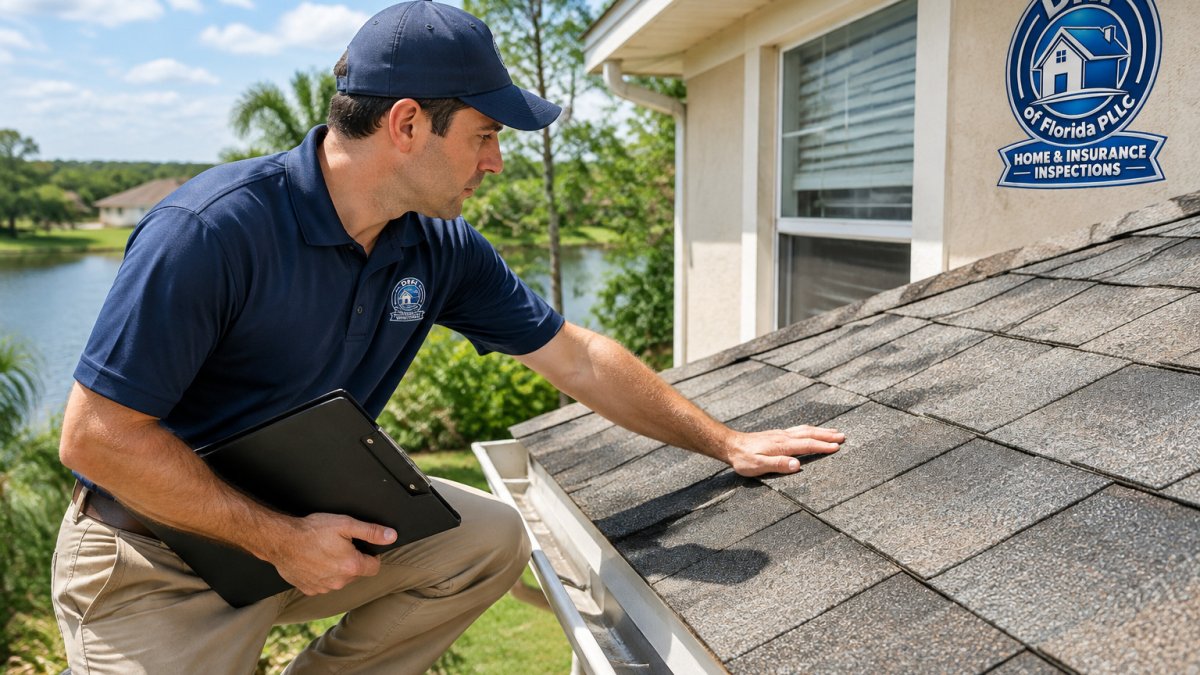
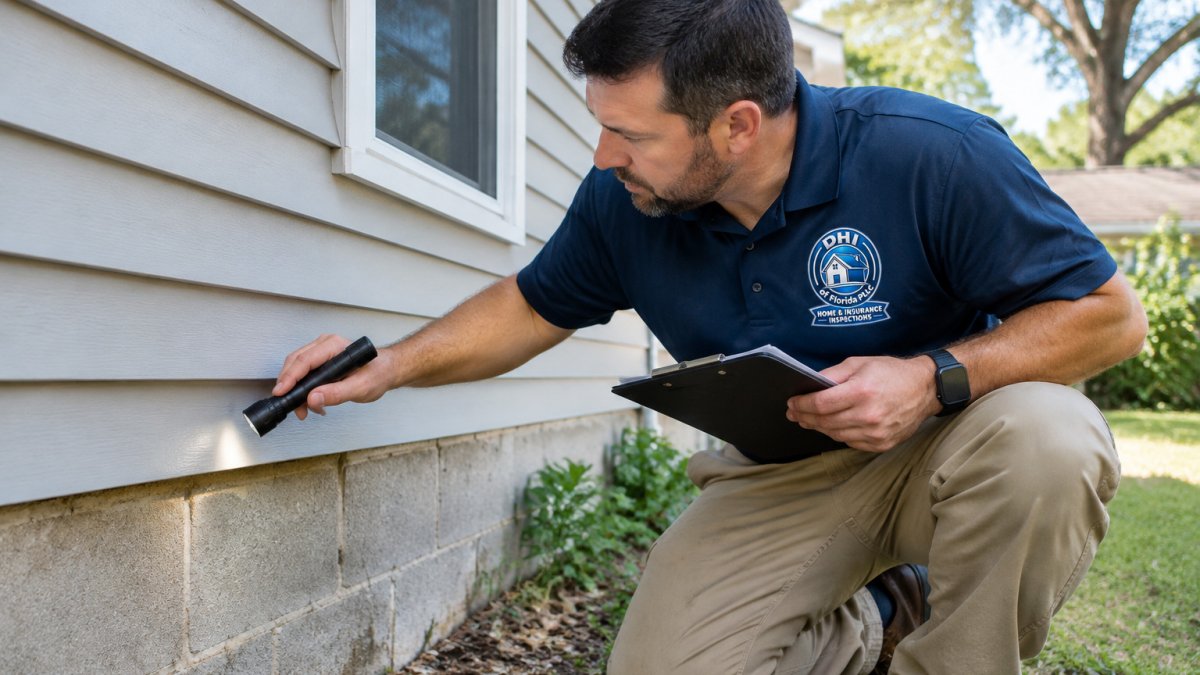
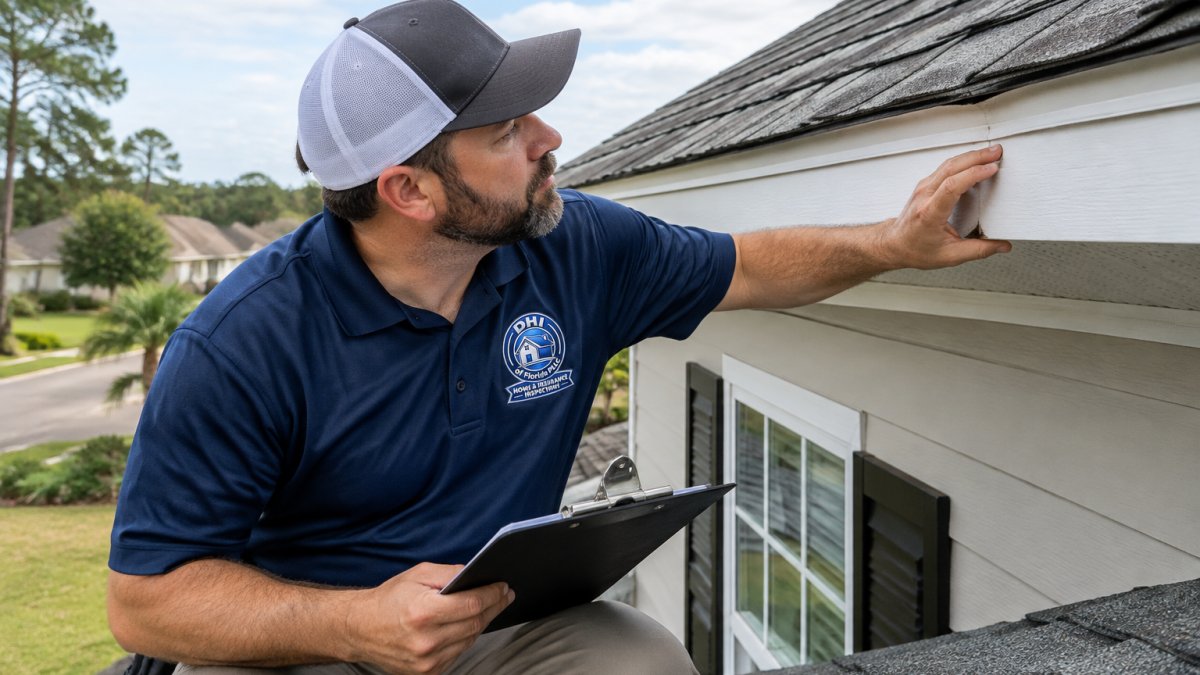
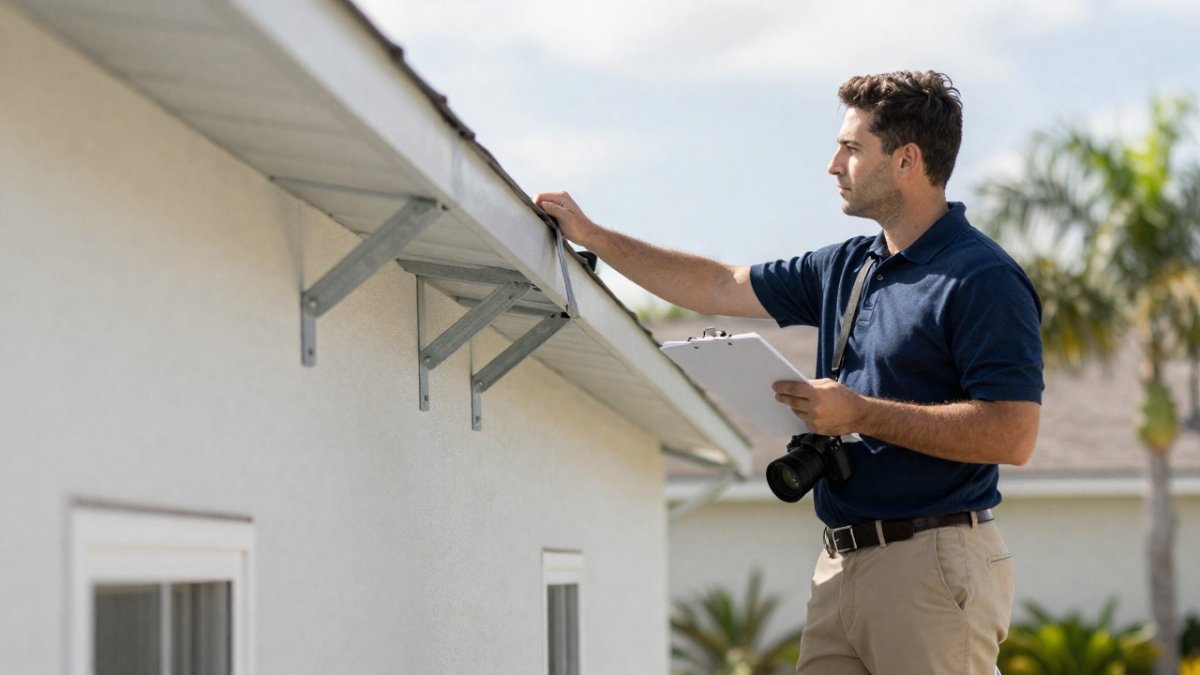
The inspector photographs each feature and records what is actually installed, with no assumptions from the home's age. To see exactly what happens during the visit, our inspection process page walks through it step by step.
Straps and nail patterns are generally only visible up close, so a drive-by or ground-level photo is typically not enough to document them.
Florida Wind Mitigation Insurance Discounts: What the Law Requires
Florida law requires insurers to include discounts, credits, or deductible reductions in their filed rates for homes with verified wind mitigation features. It is a state requirement, and the Florida Office of Insurance Regulation publishes consumer resources explaining how home hardening translates into premium savings.
The word that matters most is verified. Your insurer cannot apply a credit it cannot document. A paid invoice for new shutters proves nothing on its own. A signed inspection report on the state form does.
So what does that mean in practice?
- Insurers set their own credit amounts, so two companies may reward the same features differently.
- A discount is not guaranteed until your carrier reviews the report and confirms it.
- Without the inspection, you get the default rate.
That last point is the whole game. Homeowners with strong features and no report pay the same as homeowners with weak ones.
The Wind Mitigation Inspection Report and the OIR-B1-1802 Form
The OIR-B1-1802 form is the official Florida document an inspector completes to record your home's wind mitigation features. Insurers use this form, not a narrative report, to decide your credits. The form is published by the Florida Office of Insurance Regulation.
Walking the Form Line by Line
Here is what the inspector records and why it matters to your premium.
Roof covering. The inspector records the roof covering type and material, plus the installation or permit date. Insurers generally consider roof age when pricing windstorm coverage.
Roof deck attachment. The inspector identifies the weakest roof deck attachment, including the nail pattern and fastener schedule.
Roof geometry. Hip roofs generally shed wind pressure more effectively than gable roofs, which insurers may reflect in their pricing.
Secondary water resistance. The inspector records whether a sealed secondary barrier is present under the roof covering.
Opening protection. The inspector records whether glazed openings and exterior doors are protected by impact-rated products or rated shutters.
Permit and verification. The inspector records permit information where applicable and signs and dates the report.
Reading the Form Without a Code Book
A wind mitigation report covers a few core questions: how the roof is attached, how the deck is fastened, what shape the roof is, whether there is a secondary water barrier, and whether the windows and doors are protected.
Reports are delivered as digital files within 24 hours, and can be opened on any device.
Watch out: a form completed without attic access may not document roof-to-wall connections and deck attachment adequately.
Where to Find a Wind Mitigation Report for Your Home
Start with three places, in this order:
- Your closing paperwork. Sellers often had an inspection done, and the report may be in your file.
- The seller or listing agent. Ask directly. A recent report can sometimes be reused.
- Your insurance agent. They may have a copy from underwriting.
If none of those turn up a current report, you need a new inspection. Reports age, features change, and insurers generally want something recent and signed by a qualified inspector.
Watch out: accepting a report the seller hands you without checking the date and the inspector's signature is the most common way buyers waste a credit. Confirm it is current before you rely on it.
Cost-Benefit: Which Upgrades Are Worth It in Clay County
Not every upgrade earns its cost back, and we would rather tell you that than sell you a package. Compare the out-of-pocket cost of a fix against the annual premium difference it is likely to produce, then divide to get a rough payback period. Your carrier's filed credit schedule drives the second number, so ask your agent for the credit percentages before you spend.
Here is how we think about the trade-offs for homes around Keystone Heights and Clay County:
| Upgrade | Typical Effort | Likely Credit Impact | Worth It When |
|---|---|---|---|
| Roof-to-wall straps | Moderate, attic work | High | Straps are missing or single-wrap |
| Secondary water resistance | Low if reroofing | Moderate | You are replacing the roof anyway |
| Impact windows | High cost | Moderate to high | Windows are due for replacement |
| Hurricane shutters | Low to moderate | Moderate | Budget is tight, protection is missing |
| Hip roof conversion | Very high | High | Never worth it on its own |
The Payback Math, in Plain Terms
Take roof-to-wall straps as the clearest example. Retrofitting straps in an accessible attic is usually a few hundred dollars in labor and hardware per home, depending on attic access and how many connections need work.
Secondary water resistance is the cheapest credit to capture if you are already reroofing, because the barrier goes down during the tear-off.
Impact windows are the opposite case. The product cost is high, and the credit alone rarely pays back the windows on its own.
Hurricane shutters are the middle path. Rated shutters cost less than impact windows and can capture the opening protection credit, which matters most for homes that currently have none.
Hip roof conversion is almost never worth it on its own. Changing roof geometry means structural work and a full reroof, and the credit will not come close to covering it.
What Older Clay County Homes Usually Need
Older homes in this part of North Central Florida often have toe-nail deck attachments and no secondary barrier. That does not mean they are unsafe; the report will show what is missing, and you can decide what to fix on your timeline. A common pattern is a home with a solid hip roof and good deck attachment but toe-nail wall connections, the cheapest fix on the list is also the one holding back the biggest credit.
Watch out: any structural change to roof-to-wall connections or roof geometry may require a building permit from Clay County or the applicable municipality, and unpermitted work can complicate both the inspection and a future claim. Confirm permit requirements before work begins.
4-Point and Wind Mitigation Inspection: Why Renewals Need Both
A 4-point inspection covers four systems: roof, electrical, plumbing, and HVAC. Some insurers require it at renewal, particularly for older homes, and it answers a different question than wind mitigation does.
Wind mitigation asks: how well does this home handle wind? The 4-point asks: are these four systems in insurable condition?
Many carriers want both before they will renew or write a new policy. Booking them together saves a second visit and a second scheduling headache. If you are new to the 4-point side, our guide on what a 4-point inspection covers explains what inspectors look for and why renewals trigger it.
If Your Insurer Denies the Discount, Do This
A denial is usually a paperwork problem, not a final answer.
Work through these steps:
- Ask why in writing. Insurers should tell you which line on the form they disputed.
- Check the form against the photos. A missing checkbox or an unclear photo is a common cause.
- Request a reinspection if a feature was recorded incorrectly.
- Escalate to the insurer's underwriting department if your agent cannot resolve it.
- Contact the Florida Department of Financial Services if you believe the denial conflicts with state requirements.
A denial is often related to documentation rather than the features themselves, so reviewing the documentation is a sensible first step.
Schedule Your Keystone Heights Wind Mitigation Inspection
You now know the mechanics: qualifying features, the state form, the law behind the credits, and what to do if a discount gets denied.
For many homeowners, a single inspection is the first step toward documenting possible windstorm premium credits. Discovery Home Inspections of Florida, LLC is locally owned and operated, and InterNACHI trained. We deliver detailed digital reports within 24 hours, and offer a pay-at-closing option.
If you are ready to find out what your home qualifies for, schedule your inspection and we will get you on the calendar.
Your windstorm premium is set by features your insurer cannot see. Let us document them. Get started with Discovery Home Inspections of Florida, LLC and put a verified wind mitigation report in your agent's hands this week.
Frequently Asked Questions
Does a wind mitigation inspection actually save money on Florida insurance?
It can, but the amount varies by insurer and home. Florida law generally expects carriers to include discounts or credits for verified wind-mitigation features in their filed rates. The one thing no inspector can promise is a specific dollar figure. Confirm the expected credit with your insurer before you book, and treat the inspection as the documentation step that makes the credit possible.
How much does a wind mitigation inspection cost in Florida?
Pricing depends on property size, location, and the scope of the report. Contact Discovery Home Inspections of Florida, LLC through its website for current pricing or a quote, and confirm what the report includes before booking.
How long is a wind mitigation inspection report valid?
Acceptance periods vary, and the policy terms govern how long a report is accepted. Some carriers request an updated report after a roof replacement or at renewal, and a report tied to a prior owner may not transfer cleanly. If your report is older than a few years or your roof has changed, ask your agent whether a new inspection is needed before you assume the credit still applies.
Where can I find my wind mitigation report if I lost it?
Start with the inspector or inspection company that performed the work, which may be able to resend a copy. Next, check with your insurance agent, who likely received a copy when the policy was written or renewed. If the home changed hands, ask the seller or your real estate agent. When none of those turn up the document, a new wind mitigation inspection is usually faster than chasing paperwork.